

Undergrad Student Spotlight: Hailee Hunter
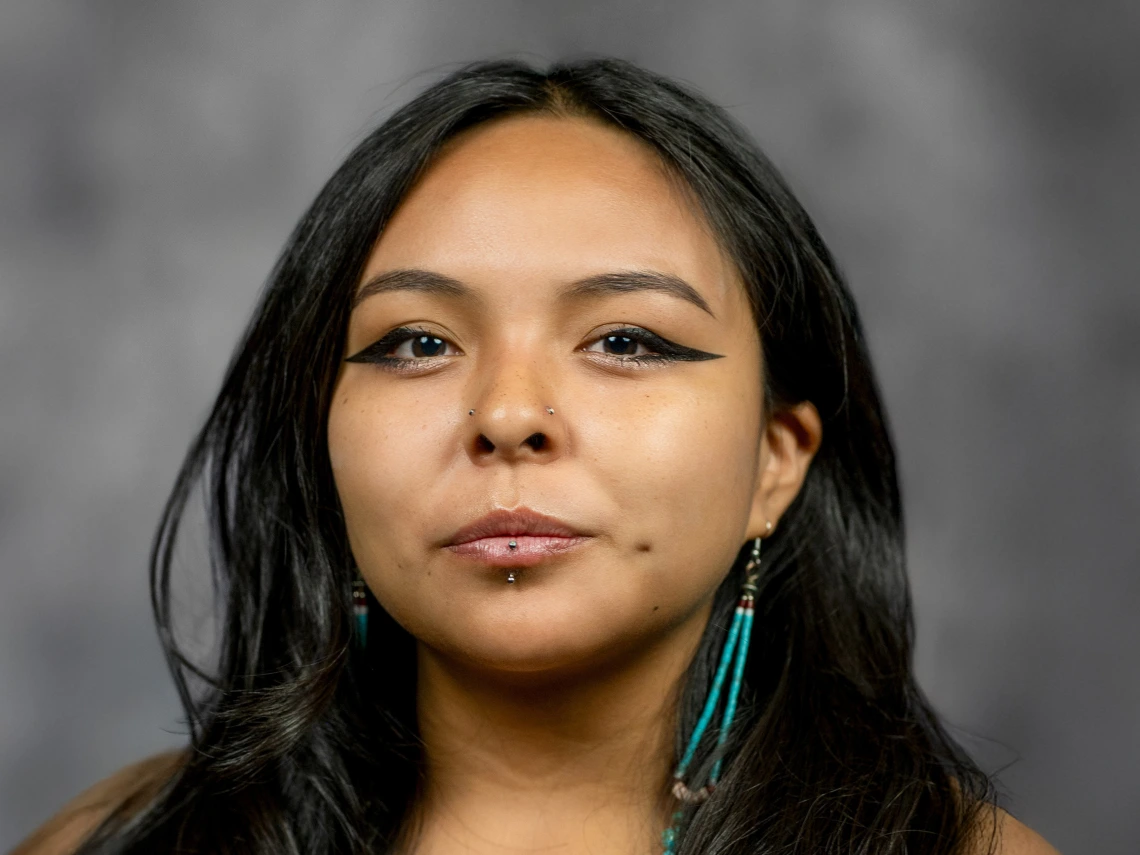
Yá’át’ééh díí éí Hailee Hunter wolyé, Sacramento, CA dee naasha (Translation: Hello, this is Hailee Hunter from Sacramento, CA). Hailee Hunter is a Navajo (Diné) fourth-year student pursuing a Bachelor of Science in Pharmaceutical Sciences with a minor in Medical Pharmacology & Toxicology. Last summer, she participated in the Native American Research Internship (NARI) Program. She contributed to research on the synthesis of microparticles for the development of a drug-delivery vehicle to alleviate symptoms of Chronic Rhinosinusitis. She is currently working in a cardiovascular pharmacology lab and plans to continue exploring different fields in pharmacological research under the Neuroscience Diversity to Elevate Education and Research Development (NDEED) training program at the University of Arizona. A few fun facts about her are that she enjoys weightlifting, hiking, playing video games, and going on solo dates to new local coffee shops!

Hunter is an incredibly devoted undergraduate. This past summer, she participated in the Native American Research Internship (NARI) program, and attended the Advancing Indigenous Science and Engineering Society (AISES) 2025 National Conference and Society for the Advancement of Chicanos and Native Americans in Science (SACNAS) National Conference in October. Through these experiences, Hunter found these opportunities exciting. "I also wanted to connect with other students from minority backgrounds and build a sense of community. The experience felt different from AISES in a way I really appreciated—everyone there was respectful and mindful of each other’s cultural and traditional values. Being in such a supportive and diverse environment was truly inspiring."
NARI is an undergraduate summer research opportunity for junior and senior students interested in health science research and rural health. Located in Salt Lake City, Utah, this 10-week paid internship promotes building community and mentorships just as much as it emphasizes research. Hunter joined the NARI program because of their mission and its complement to her academic interests and efforts to preserve her indigenous culture and heritage. "I am passionate about pursuing a career in health science while honoring and preserving my Indigenous heritage, and this program integrates both. Moreover, this program seemed like a great way to pursue my interest in a professional research career, giving me the opportunity to develop my skills and contribute to work that benefits Indigenous communities."
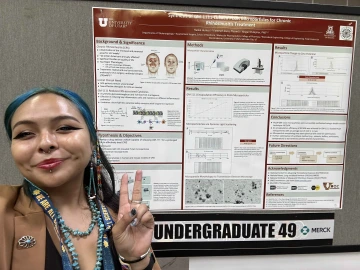
After submitting her application to SACNAS, Hunter was selected to present her research, "Synthesis of GM-1111-Loaded PLGA Microparticles for Chronic Rhinosinusitis Treatment". She focuses on chronic rhinosinusitis (CRS), long-term inflammation in the nose and sinuses that affects about 31 million Americans. It comes in two types: with nasal polyps and without. Current treatments help some people, but about half don’t respond well because the disease is complex. A drug called GM-1111 can reduce sinus inflammation by blocking certain immune pathways, but it breaks down quickly and would need daily dosing. To improve this, they are creating tiny biodegradable particles (PLGA microparticles) that can slowly release GM-1111 over time. Early results show they can load about 80% of the drug into particles about 13 micrometers in size. Next, they will work to improve the particles and test how well they release the drug and treat CRS in mouse models.
Beyond networking, Hunter is excited about continuing her research to directly improve patience care and community health. It's at the R. Ken Coit College of Pharmacy that she plans "to continue developing my skills in health science research, exploring drug discovery and therapeutic strategies, and gradually taking on more independent responsibility to make a meaningful impact in the field."
Q & A
What inspired you to pursue a Bachelor of Science?
- What inspired me to pursue a Bachelor of Science is the potential to make a meaningful impact on both individual patients and the broader community. Science, playing a crucial role in improving people’s well-being, aligns with my passion to follow a path where I can contribute to improving the healthcare system, supporting health initiatives, and helping create solutions or raise questions that will enhance access to safe and effective healthcare.
Can you describe a particular project or research you’ve worked on that you found especially rewarding?
- During the NARI summer internship program, I had the opportunity to synthesize microparticles for treating the symptoms of Chronic Rhinosinusitis. This experience was particularly valuable for me, as it was my first time working in a laboratory setting. Engaging with the environment, collaborating with colleagues, participating in lab meetings, and learning various techniques were incredibly rewarding. Although I wasn’t good at pipetting or performing serial dilutions at first, I was able to master these techniques with practice. Participating in this program helped me learn the power of persistence and dedication, which highly contributed to my success in a lab setting.
What’s one thing you’ve learned from a fellow student that has inspired you?
- One thing I’ve learned from a fellow student who has really inspired me is the importance of putting myself out there, even when I lack experience. My interest in working in a lab has always been strong, but I hesitated to ask to join one out of concern that I might not meet the expectations. However, when I discovered that this fellow student conducted research and presented her work at several conferences throughout 2024, it motivated me to pursue my own research presentation. Her ability to apply herself has been a huge inspiration, and her example has encouraged me to step out of my comfort zone and strive for more.
What’s your favorite study spot on campus to relax or study?
- One of my favorite places to unwind is definitely the Environmental and Natural Resources 2 building! The views are absolutely stunning, and I adore the architecture and all the beautiful plants around it. If you have a chance, I recommend checking it out, especially when it rains!
What’s the most surprising thing you’ve learned about yourself since starting this program?
- The most surprising thing I’ve learned about myself since starting this program is my ability to persevere in both my academic and personal life. Throughout my undergraduate academic journey, I've faced numerous challenges, including the loss of family members and struggles with maintaining focus, which have impacted my academic performance. Reflecting on how I’ve navigated these difficulties has revealed a strength and resilience within me that I didn’t fully appreciate before. This journey has truly shown me that I am capable of balancing life's complexities and managing them through strength and perseverance.