

Rick G. Schnellmann Thinks Beyond Kidneys and Explores New Avenues for His Translational Research
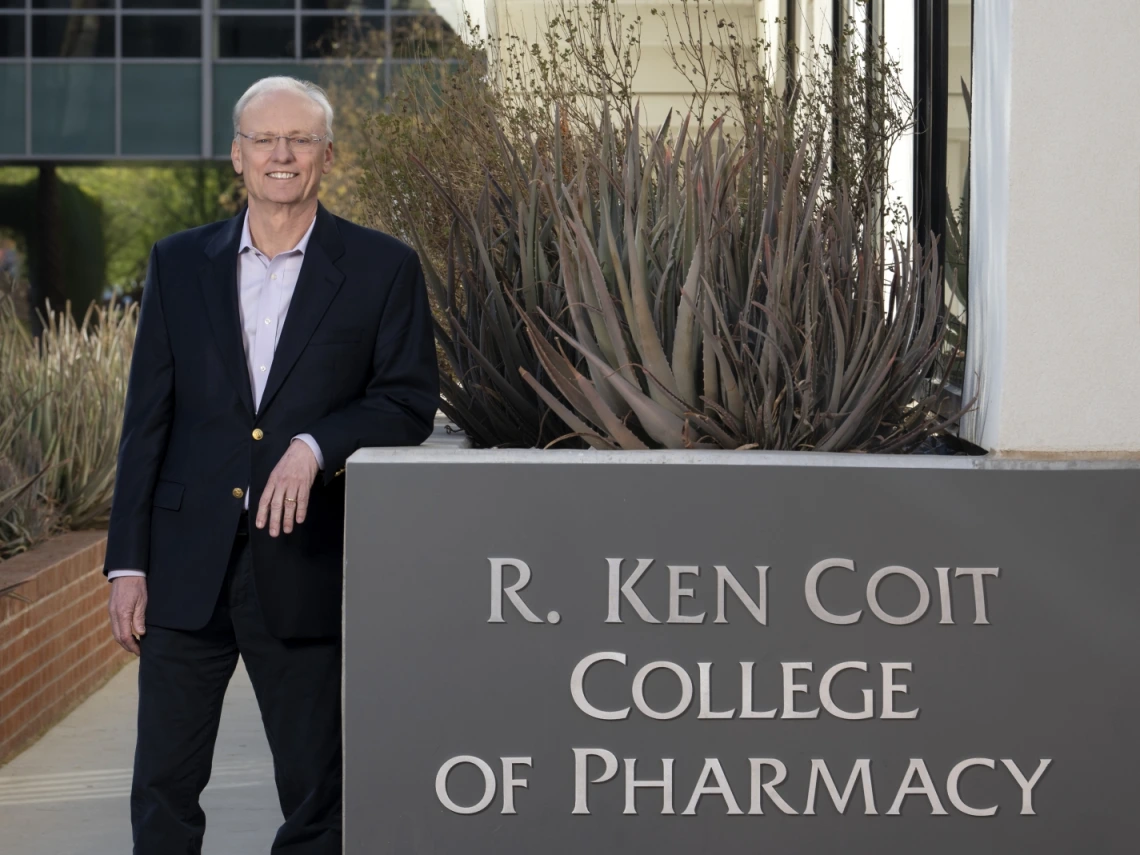
Rick G. Schnellmann, PhD, professor and Howard J. Schaeffer Endowed Chair in Pharmaceutical Sciences at the R. Ken Coit College of Pharmacy, has authored and co-authored 24 research papers in the last 19 months. Building on his decades of research, Schnellmann pursues additional avenues beyond his kidney research to improve patient outcomes and drug efficacy. “I am grateful to have published these great publications with outstanding researchers,” shared Schnellmann. “I applaud all of them.”
Schnellmann studies mitochondrial dysfunction and biogenesis, focusing on identifying and developing drugs to treat acute kidney injury, diabetic kidney disease, stroke and Parkinson's disease through his dual appointments with the University of Arizona and the U.S. Department of Veterans Affairs. His research has been continuously funded since 1987, including NIH grants totaling more than $38 million, and he has founded three spin-off biotechnology companies focused on drug discovery and development.
In his most recent kidney-focused publication, “Kidney-Targeted Nanoparticle Delivery of Formoterol Mitigates Diabetic Kidney Disease without Adverse Cardiac Effects,” his lab investigated using formoterol, an FDA-approved asthma medication that induces mitochondrial biogenesis, to treat diabetic kidney disease while avoiding potential cardiovascular side effects of the drug.
Because damaged mitochondria are thought to contribute to the progression of kidney disease in diabetes, his lab packaged formoterol inside tiny biodegradable nanoparticles designed to preferentially deliver the drug to the kidneys. In diabetic mice, both regular formoterol and the nanoparticle version slowed kidney disease, and the targeted nanoparticles also reduced several signs of structural kidney damage and inflammation.
Most importantly, unlike the regular drug, the nanoparticle treatment did not show evidence of cardiovascular toxicity after long-term use. The findings suggest that directing formoterol specifically to the kidneys could offer a safer way to harness its protective effects, although the approach remains experimental and has not yet been established as a treatment for people with diabetic kidney disease.
While he has historically focused on kidney research, Schnellmann has ventured into other research areas, such as neurodegenerative diseases, cancer and pain.
Parkinson’s Disease
In January 2026, Schnellmann co-authored “Lasmiditan ameliorates cortico-hippocampal pathology and improves cognition in aging parkinsonian mice,” with Lalitha Madhavan, MD, PhD, professor at the College of Medicine-Tucson, which explored whether lasmiditan, an FDA-approved migraine drug that induces mitochondrial biogenesis, could also help address some of the cognitive problems associated with Parkinson’s disease (PD).
“It was a comprehensive study that assessed lasmiditan’s potential to improve symptoms and pathology in the context of early and late-stage Parkinson’s disease in an age-relevant mouse model,” shared Madhavan. “We basically found that lasmiditan improves PD-related cognitive deficits and pathology especially in the young mice with early-stage PD, though some effects in the older animals were also seen.” The lasmiditan work occurred primarily in Madhavan’s laboratory in collaboration with Schnellmann, with funding provided by the Michael J. Fox Foundation Parkinson's Disease Therapeutics Pipeline Program.
Because impaired mitochondria are thought to play an important role in Parkinson’s disease, the researchers tested whether lasmiditan could stimulate the brain to produce healthier mitochondria. In younger mice with Parkinson’s-like disease, the drug improved memory and cognition and reduced anxiety-like behavior. These improvements were accompanied by improved mitochondrial function and less accumulation of alpha-synuclein, a protein closely associated with Parkinson’s disease, particularly in brain regions involved in memory.
Although the effects were less pronounced in older mice, cognitive benefits were still observed, suggesting that lasmiditan may have potential as a repurposed treatment for Parkinson’s-related cognitive decline, though the findings have yet to be demonstrated in humans.
Cancer
Cisplatin is an effective treatment for bladder cancer, but it can also damage the kidneys, limiting how safely it can be used. “4-Methylpyrazole-mediated inhibition of cytochrome P450 2E1 protects renal epithelial cells, but not bladder cancer cells, from cisplatin toxicity” evaluates whether 4-methylpyrazole (4MP) can protect kidneys from cisplatin-induced toxicity without compromising its effectiveness against bladder cancer. The study suggests that an enzyme called CYP2E1 may play an important role in kidney damage by triggering harmful molecules that injure kidney cells.
Researchers found that blocking this enzyme with 4MP reduced kidney injury in male mice and protected normal human kidney cells grown in the laboratory. Importantly, 4MP did not appear to weaken cisplatin’s ability to kill bladder cancer cells, which do not produce CYP2E1. The findings point to 4MP as a potentially useful way to protect the kidneys during cisplatin treatment without compromising the drug’s cancer-fighting effects, though this approach still needs to be tested in patients.
Moving from bladder cancer to skin cancer, Schnellmann co-authored the research paper “Integrative analysis reveals therapeutic potential of pyrvinium pamoate in Merkel cell carcinoma” with Megha Padi, PhD, associate professor at the College of Science. Merkel cell carcinoma is a rare but highly aggressive form of skin cancer, and researchers are still working to understand what drives its development. This study found that a signaling system called Wnt appears to play an important role in the disease, particularly in cancers linked to Merkel cell polyomavirus.
Using computer analysis, the researchers identified pyrvinium pamoate, an FDA-approved medication traditionally used to treat parasitic infections, as a drug that could potentially disrupt this cancer’s biology. In laboratory and animal studies, pyrvinium reversed some of the cancer’s neuroendocrine characteristics and affected tumor cells in several ways, including triggering cancer cell death, disrupting their energy-producing mitochondria, and causing cellular stress. The drug also slowed tumor growth in mice, suggesting that pyrvinium could potentially be repurposed as a treatment for Merkel cell carcinoma. Its effectiveness and safety in patients still need to be established.
Collaboration
Schnellmann often collaborates with Kristian Doyle, PhD, professor at the College of Medicine-Tucson, on stroke research. Doyle investigates the immune response to stroke, particularly the mechanisms that sustain inflammation in the brain during the weeks and months after the initial injury. A major focus of his work has been understanding how adaptive immune responses, including T and B cell responses, develop within the chronic stroke infarct and whether they contribute to recovery or to persistent tissue injury.
The publication “Infarct-associated oligoclonal T cell expansion in chronic experimental stroke across age, sex, and models” is part of a much larger VA-funded collaboration in which Schnellmann and Doyle are trying to understand why inflammation in the brain after stroke fails to resolve efficiently. Their broader goal is to identify the cellular and molecular mechanisms responsible for this persistent inflammatory environment and use that information to develop drugs that promote resolution and improve long-term recovery after stroke.
For this particular study, Doyle’s group contributed to the conception and experimental direction, the interpretation of the immunosequencing data and placing the findings within the broader context of chronic post-stroke neuroinflammation. This collaboration is particularly valuable because it brings together complementary expertise in stroke biology, immunology, pharmacology and therapeutic development.
“One of the most important findings from this work is that T cells, which are part of the adaptive immune system, are not simply being recruited into the chronically inflamed brain in response to a chemokine gradient,” said Doyle. “The local clonal expansion we observe indicates that these T cells are recognizing antigen and mounting an adaptive immune response within the infarct. We also found that the magnitude and composition of this response differ with age and sex. Together, these findings suggest that chronic inflammation after stroke includes an organized, antigen-driven immune response within the brain, rather than simply the passive accumulation of circulating immune cells.”
An important next step for them is to determine what these T cells are recognizing, whether their response is beneficial or harmful to recovery, and whether this component of chronic inflammation can be therapeutically modified.
Today, Schnellmann works closely with Natalie Scholpa, PhD, an assistant research professor at the Coit College of Pharmacy. Scholpa previously trained as a postdoctoral researcher in the Schnellmann lab and now maintains an independent research program while continuing an active research collaboration and mentorship with Schnellmann.
She recently received a New Investigator Award from the Arizona Biomedical Research Centre for her submission “Development of MARY1, a novel and selective serotonin 2B receptor antagonist, for non-opioid pain management”. Scholpa’s research is focused on evaluating MARY1 as a potential new treatment for inflammatory and neuropathic pain. MARY1 was developed through work in Schnellmann’s lab, and her project builds on promising early findings to determine how effectively it reduces pain and how it works. The goal is to determine whether MARY1 warrants further development as a non-opioid treatment for pain.
“Dr. Rick Schnellmann’s mentorship has played a major role in my development as a scientist, from my postdoctoral training through the establishment of my own research program,” shared Scholpa. “One of the things I value most is his emphasis on asking questions that are scientifically interesting and have the potential to lead to meaningful new treatments for clinically relevant diseases. Our collaboration has evolved as my research interests have grown, and his guidance and support have been instrumental in helping me develop my ideas into independent lines of research.”
Across kidney disease, Parkinson’s disease, cancer, stroke and pain, Schnellmann’s work reflects a research program that continues to evolve while remaining grounded in a common goal: translating discoveries in mitochondrial biology into potential new therapies. His recent collaborations and the growing work of researchers he has mentored, including Scholpa, further extend that impact beyond his own laboratory. With decades of research behind him and new therapeutic avenues still emerging, Schnellmann continues to explore how insights from one disease area can open doors in another, and ultimately, how those discoveries can move closer to improving patient care.